
Work That Rests Us
Micro-respites and how a week of farm chores brought me back to life

Hi friend,
Recently I took a respite week in west-central Oregon working on a farm owned by Laura P., my friend of 20+ years. This essay is a reflection of my stay there and some of the thoughts it brought up in me, ideas about work, rest, friendship and balance.
One thing that crystallized for me during my time on the farm is the idea of micro-respites, small, literal escapes that serve to bring the intensity of life down a notch. We all need more of these. I hope you enjoy it.
Hello!
Before I jump into today’s post, I’ll hope you’ll subscribe to Joy on the Journey.
Let’s face it, life is hard. But we don’t have to solve all our problems to find joy. It’s here now. When you suddenly feel joy, “don’t hesitate,” Mary Oliver wrote. “Life has some possibility left. Perhaps this is its way of fighting back.”
Work That Rests Us
I don’t have much experience with working with my hands. Aside from scooping ice cream at Baskin Robbins as a teenager and waiting tables in college, I’ve worked on a computer throughout my life.
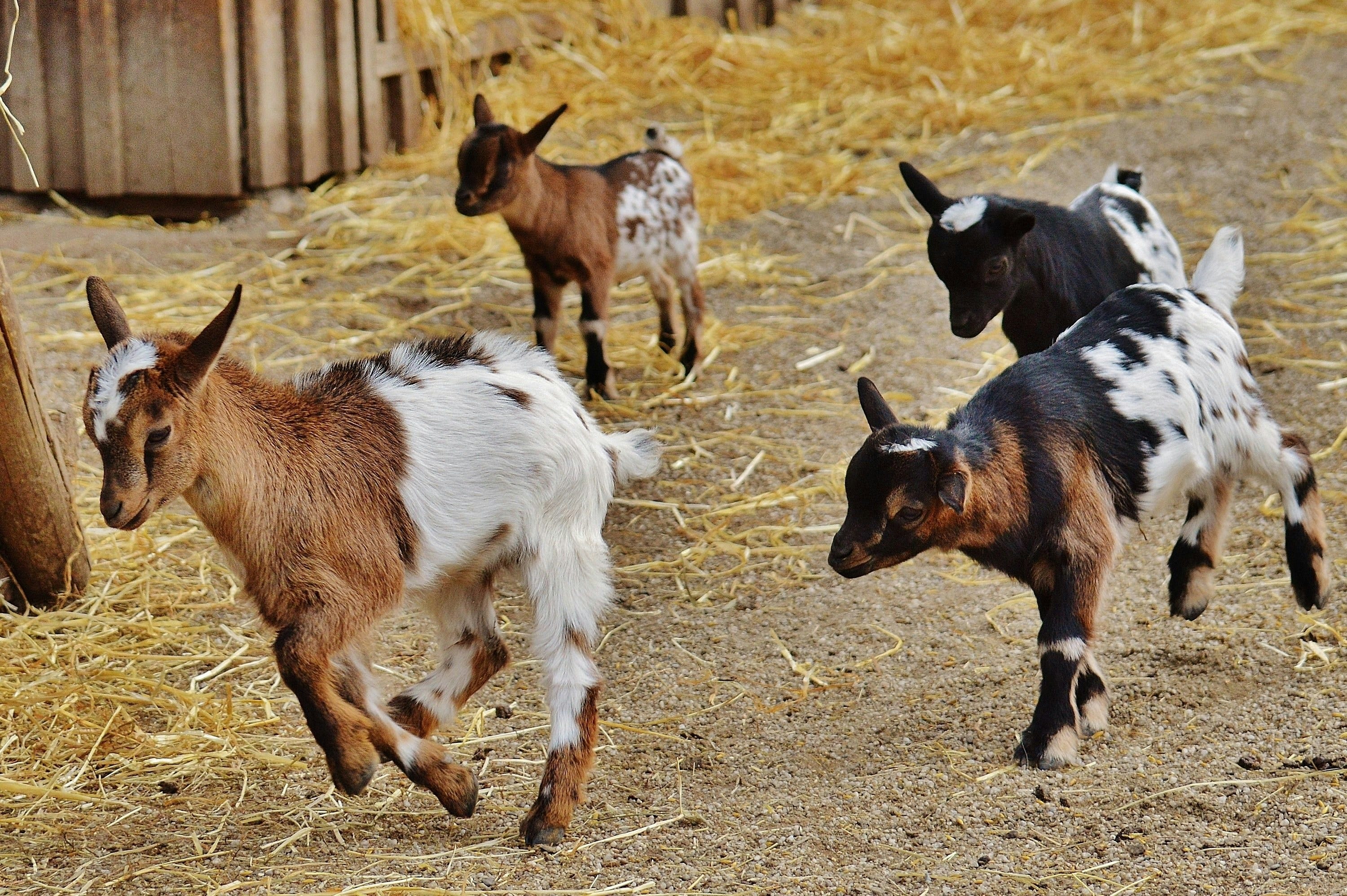
But recently I left my family for a week to work on a friend’s farm in Oregon, and I couldn’t be happier. I milked goats. I corralled chickens. I seeded eight varieties of squash and five types of flowers. I planted tiny pea plants, gathered parsley, collected eggs, and petted farm cats. I learned how to run irrigation lines, helped install an electric fence and carried baby goats to a new pasture.
Rest, reimagined
It wasn’t just a vacation from my caregiving—it was the rare opportunity of manual labor. As I completed each task I noticed how good I felt, body in motion, helpful and satisfied. And as I criss-crossed the farm’s property over and over, I noticed myself becoming centered, gathering a rhythm: shoveling, weeding, covering, planting, carrying.
It didn’t feel like work, it felt like respite, a term that refers to both an urgently needed period of relief from something difficult or unpleasant, and— in the sense of the Latin “respicere”— an opportunity “to look back at” or “to regard” my life from a distance.
How odd, I thought, to think of this “work” as respite from life. Reflecting on this, I realized that I usually feel an intense and persistent inner stress that I try to compartmentalize while I get “work” done.
The stress of being a responsible adult.
The stress of wearing too many hats.
The stress of thinking about my kids, their schooling, health and uncertain futures.
The time spent administering all the tasks of life.
I dream of escaping my life, and just “being”, comfortably, in whatever place I choose to be, working in a way that feels life-giving. Since my week of farm work, I’m tempted to think living closer to nature would do the trick.
I am full of distractions / so I must dig
— Rebecca Villineau
My friend has a hobby farm, a small-scale farm where the focus is more on self-sufficiency and enhancing one’s lifestyle than on generating big profits. People tend to project glamour on hobby farm owners, a simpler way of life kind of nostalgia.
I might be naive, but I am one of those people, I can’t help it.
In my regular life in California I’m on a computer most of the day. It’s all mental, my head and the digital world. My body is immobile, disengaged and on-standby. Even though I work in a cheerful coworking space, I barely notice the sun filtering through the big windows and the houseplants stretching their delicate stems towards it.
Tired, in a good way
My days of farm work left me energized and tired in a good way, whereas my computer work often leaves me feeling revved up, from which it takes hours to calm back down, farm work left me energized, and tired in a good way.
There’s a robust vitality built into working with animals and the land. You can hear your heart speak and get into sync with the knowings of your body. The work is visceral and tactile. Doing farm chores, the aliveness I long for was everywhere. From the goats and chickens and the tiny earth worms I discovered shoveling compost, to the green sprouts of poison oak I had to circumvent walking the trail at the back of the property.
I felt it most clearly one afternoon as I seeded squash into tiny square containers. My friend joined me, and we talked as we worked—hashing out our lives, complaining about middle age, laughing about our dream to turn this farm into a Netflix series. By the end of the day I was exhausted. My thighs and hips ached from bending and squatting, but I was breathing fully and easily. I was smiling.
We picked some lettuce and went inside to make a salad and drink a cocktail.
And there’s something about working with dirt that’s therapeutic, a rich source of possibility and poetry. I thought back to my work on the farm when I read Rebecca Villineau’s poem “The Poems are in the Dirt”. As she says:
Sometimes they are found
From just wandering in the garden
Weaving between the stalks of sunflowers
Other times a person must
Get on their knees
Throw the spoon away
And dig with bear hands
I have farmed as a writer and written as a farmer —Wendell Berry
Is nature a prerequisite for rejuvenation? I don’t think so. I remember my first inklings about respite when I went to Paris for my 40th birthday.
We were on a budget, so we didn’t see the Eiffel Tower or the Louvre or Notre Dame, except from afar. We spent the days on foot, lazily wandering around the city, ducking into hidden bookstores and sitting in parks watching Parisians do their daily rounds.
We ate at a fancy restaurant once a day, getting the fixed price lunch menu. For dinner we would pick up bread, cheese and wine and snack in our hostel, talking, laughing and reading. I fell in love with David Lebovitz’ book The Sweet Life in Paris, searching for the best ice-cream.
At the end of four days doing nothing in Paris, I felt replenished, just as I did doing farm chores, even in the midst of a big city. The days were active but not rushed, there were no goals to meet, no worries about being productive. Each day had the permission for appreciation that can only come from a complete escape from being tangled up in one’s own life, a true respite.


The liturgy of ordinary life
Paris, a farm in Oregon. Neither of these is something I can do on a monthly basis. What I really need, I think, are micro-respites, small escapes that can happen in the context of the life I already have, any week of the year. But how?
The Quaker poet Gunilla Norris wrote in her collection Being Home that most of us sense that, at some level, there’s a sacredness to our daily round. “Within our dailiness lies a huge dimension,” she says, but most people never explore it, only giving themselves permission to delight in their lives when they go on vacation, as I did in Paris.
Norris found solace in treating each chore, whether opening the mail, paying the bills or cleaning the kitchen, with reverence. She carried out each task in honor of something bigger, grateful for how each act of daily living serves the greater whole.
Paying her bills was a way to express gratitude for her life of abundance. Sweeping her living room was an investment in self-care, the calm she would later feel in her tidy home. Because it’s true, no matter where we are, we can’t escape our daily lives. And when we do escape it won’t be long before we find ourselves plunged back into a life we need respite from.
A garden doesn’t grow on its own, children can’t be ignored, and the goats need to be milked and fed every day.
And even though a week of farm chores lights me up, I know that farm work is hard. I can see that my friend is as stressed by the demands of her animals as I am by my digital work.
As I was about to return home at the end of the week, grieving a little because I’d just barely begun to feel rested, she was meeting with a farm sitter so she could visit her daughter at college in California. Amidst the heat and traffic, she would find respite— an escape and a chance to regard her life from a distance.
And so, I realized that we both need a break from our lives. There’s no doubt that there’s something vital and connective about farm work, but maybe we need both, the grounding rhythm of our everyday—whatever it looks like— and the wonder that comes when we step away from it. Maybe I’m meant to belong to my life and also to wander from it—gathering something I didn’t know I needed.
So I’m beginning to ask myself: how can I build more outdoor work into my life? And how can I create micro-respites within the work and care I can’t step away from—at least not now?
I’m still figuring this out, but farm work has left me inspired. Maybe I’ll take a book of poetry to my daughter’s next dentist appointment, or go pretend camping in our trailer parked in our driveway. I’ll try to remember to linger, rather than rush and do something—anything, without a goal.
Notes and Gratitudes
A big thanks to my friend Laura P., for hosting my respite week at Windy Hill Farm, and my friends in the Write Hearted Community who helped talk me through the ideas in this essay: Emily Ann Hill, Dana Allen, Kathy Ayers, Linda Kaun, Brigitte Kratz, Rick Lewis. To Leanna Deittrich, for your deep insight and feedback and Promise Tewogbola for writing with me on Saturday mornings.
This reflection was inspired by my time in Oregon, and also by the poetry of Rebecca Villineau and Gunilla Norris.
The imagery of getting down on one's knees, taking distance from one's own life as the definition of respite, the earth under your fingertips, it makes me breathe a little deeper just reading about it. We've been taking a lot of time for forest walks this summer at home and nature has this unwinding capacity that is unmatched. I can imagine that the kind of working within it you describe is doubly restorative. I also found your comment interesting that your friend was just as stressed about farming as you get about keyboarding your way through your days, and it struck me that part of the solution is perhaps work sharing, friends entering each other's worlds and helping out for a while in an exchange of respite.
Emily, thank you for taking us with you on your week on the farm and to look back on doing nothing in Paris. Both sounded wonderful! It’s fascinating how work for one person can be respite for another. Also, the idea of how you might build micro-respites into your daily life is something well worth exploring in future posts. It reminds me a little of the concept of having “mini retirements”.